ACCREDITATION


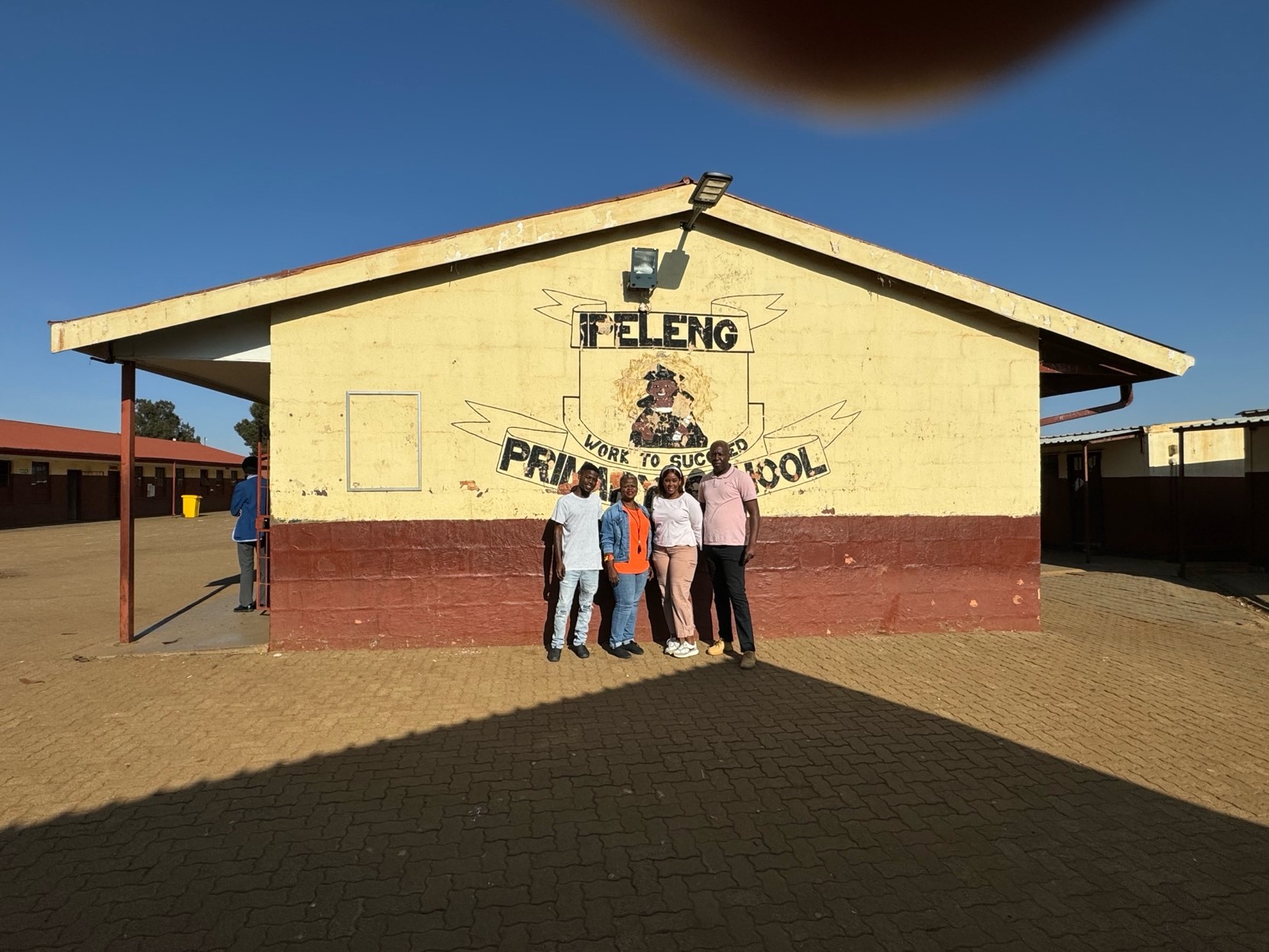
Gold Fields, a valued client of Growth-Link, driven by a deep passion for community upliftment, particularly youth development, partnered with Growth-Link to launch a transformative life skills initiative. This programme, aimed at Grade 10 and 11 learners from various schools in the Westonaria area, seeks to empower 44 promising young individuals with essential life skills. Through engaging facilitators, dynamic activities, and the enthusiastic participation of learners, the initiative has become a beacon of hope, equipping students to face life’s challenges with confidence and resilience.
A Vision for Empowerment
The Growth-Link facilitation team—comprising Thabo Mogotsi, Dr. Desia Sisana, Thand’okuhle Nkonyane, and Omphile Sisana—designed a five-day programme that provided learners with valuable life lessons. According to Mogotsi, the primary goal of the initiative was to equip students with practical tools to navigate life's challenges. "It’s all about life skills," Mogotsi explained. "We are showing them how life is and how to approach it. From overcoming obstacles to learning effective communication, this programme is about preparing them for the real world."
The programme began with a module aptly titled Moving Mountains focussing on teaching students the importance of diversity and working together. It helps students understand that everyone is different, and that's what makes our world special. Through fun activities and discussions, the module shows how we can appreciate each other's unique qualities, learn from each other, and work as a team to solve problems. By celebrating these differences, students can create a more caring and inclusive school environment.
Learners were introduced to strategies for tackling life’s hurdles. "The students loved it," Mogotsi remarked. "It’s amazing how much we as facilitators learn from these young ones. They are open, engaged, and eager to grow."
Engagement and Participation: Learners Stepping Up
Growth-Link facilitator Thand’okuhle Nkonyane reflected on how learners engaged with the programme. “Some were initially hesitant to participate in class discussions, while others jumped in enthusiastically," she said. "However, we noticed that certain hands-on activities sparked more engagement. For instance, during the ‘traffic jam’ activity, even the shyest students found themselves stepping up to lead the game.”
Nkonyane emphasised the importance of creating a safe space where all students felt comfortable to participate. "By the end of the week, even the most reserved learners were contributing their ideas and stepping into leadership roles," she added, noting the power of encouragement in helping students find their voices.
Emotional Responses: Exploring Stress and Solutions
The programme didn’t shy away from difficult topics, such as managing stress. Nkonyane pointed out the emotional depth of the learners' responses. "Two groups stood out during these sessions—one performed a short play about a mother and her troubled son, while another created a podcast on how to approach stressful situations and deal with them," she shared.
Nkonyane also observed the transformation of more reserved learners. "The shy and soft-spoken students realised that they needed to be heard and seen during presentations. It was incredible to see them step up and take ownership of their presence," she added.
Transformative Learning Moments and Behavioural Changes
Throughout the week, Nkonyane and the other facilitators witnessed many transformative moments. "One of the most significant shifts occurred when learners who were used to taking charge realised that leading doesn’t always mean knowing everything," Nkonyane said. “They began to understand their strengths and learned how to rely on their peers when necessary."
Learners also started using more inclusive language and worked to involve classmates who had previously been left out. "The students began to understand how a team works and learned to embrace everyone’s contributions. This shift in group dynamics was one of the most rewarding aspects of the programme," Nkonyane remarked.
Experiential Learning Through Activities
For facilitator Desia Sisana, the physical, emotional, and interactive nature of the adventure-based activities played a crucial role in the students’ learning. "We engage them in activities outside the classroom—not just games for fun, but ones that teach life skills such as communication, empathy, and problem-solving," Sisana explained.
According to her, these activities ensure that the lessons stay with the learners long after the programme concludes. “They are not just gaining knowledge—they are learning how to apply it in real life,” she noted.
Learners' Reflections: A Transformational Experience
Learner Lisa Inkhanya, one of the participants, shared her own transformational experience. “This programme has changed my perspective on how I operate in my daily life,” she admitted. "I used to think the way I handled things was fine, but after attending these sessions, I realised there’s so much more to learn. It’s humbling."
For Lisa, the most impactful part of the experience was hearing the diverse perspectives shared by her peers and facilitators. “Interacting with different people and hearing their views on life was refreshing and empowering,” she said. Lisa also expressed her admiration for the facilitators and recalled a powerful quote: "The most hurtful thing a person can do is think they know it all." This insight has prompted her to approach life with more humility and a commitment to continuous learning.
Building Future Leaders: A Shared Vision for Growth
At the heart of the initiative lies the belief that today’s youth are tomorrow’s leaders. Growth-Link facilitator Sisana was confident that the programme had a lasting impact on the students. "We believe we’ve helped create young people who are energised and ready to take on the world," she said.
Learners acquired more than academic skills - they built resilience, learned the importance of accountability, and developed a sense of empowerment. "The students have become more willing to ask for help, communicate openly, and take control of their futures," Nkonyane added, affirming the positive behavioural changes seen throughout the programme.
Personal Growth as a Facilitator
Nkonyane also reflected on her personal growth as a facilitator. "My biggest takeaway was realising that each learner was chosen for a reason, and they proved that throughout the week," she said. "They are hungry to learn new things, and with the right guidance, I believe they will grow into successful individuals."
Nkonyane expressed her pride in the learners’ development, emphasiing that with a nudge in the right direction, they have the potential to achieve great things.
A Model for Success
The partnership between Gold Fields and Growth-Link has been a resounding success; not only in the enthusiasm of the learners but also in the personal growth experienced by the facilitators. Mogotsi and Sisana both agreed that they had learned as much from the students as the students had learned from them. "The energy, determination, and willingness to learn among these young people is inspiring," Mogotsi said.
In conclusion, the Growth-Link and Gold Fields initiative stands as a powerful testament to the impact that well-structured life skills programmes can have on youth. Through hands-on learning, personal reflection, and mutual growth, this programme is preparing South Africa’s next generation to lead with empathy, resilience, and purpose.

Leadership is about moving forward. It involves guiding individuals, teams and organisations toward a common goal or vision.
Achieving this goal can often become an overarching focus, but when leaders only focus on performance and targets, individuals become stuck, like cogs stuck in a wheel, making any kind of movement difficult or impossible. In today's fast-paced and dynamic work environment, effective leaders must therefore balance workplace efficiency with employee well-being.
Leaders often fall into the trap thinking that the organisation can only move forward when improving the functional expertise and business insight of team members. The world today requires more than that. Where functional expertise can be sourced and business processes hard-wired into systems, what we miss is the human factor.
This is where emotional intelligence (EI) comes in.
Leaders with high EI are crucial for achieving sustainable organisational success. These leaders can connect, inspire, and navigate complicated interpersonal relationships - fundamental competencies in a world where technology is currently damaging (and dare I say dissolving) social connection. As social beings, this loss in social connection leaves us feeling lost and vulnerable.
How has technology contributed to this break in connection?
In the business world (and in our private lives), we have become extremely reliant on digital communication platforms that has led to less face-to-face interactions and less opportunities for genuine connection.
It has also been found that empathy and understanding decreases because social media users can comment on contents anonymously. Anonymity and detachment make it challenging to develop meaningful relationships that are based on mutual trust and respect. Meaningful relationships are very important in creating an effective work environment. Meaningful relationships form the foundation of trust, communication, and collaboration among team members and with leaders. When individuals feel connected to their team members on a personal level, they are more prone to share ideas openly, participate in productive conversations, and work together effectively towards shared goals.
How do we then bridge the gap between lack of concern for others and connection?
Not only for workplace effectiveness, but ‘survival’ of the individual. We often forget that the need for interaction is in our DNA and is crucial to our wellbeing. Connection creates a sense of belonging and stimulates cognitive functions.
The answer lies in emotional intelligence (EI). Leaders that have it and leaders that develop it in their teams.
Engaging with others helps manage stress and anxiety, enhances self-esteem, and promotes happiness by releasing hormones like oxytocin. It has even been found that social connections encourage healthier lifestyle choices and improve physical health.
So, how does it work at work?
Emotional intelligence involves recognising, understanding, and managing one's own emotions, as well as the emotions of others. It forms the basis of self- and relationship management – qualities that are very important in leadership roles.
A simple way of illustrating the aspects of EI is:

The fundamental principle of emotional intelligence in leadership is self-awareness. Leaders who have a good understanding of their own emotions, strengths, and weaknesses are better equipped to make informed decisions and manage their reactions and responses in challenging situations. By recognising their triggers and biases, emotionally intelligent leaders can decrease the impact of negative emotions such as anger or frustration on others.
Self-regulation – the ability to control impulses and manage disruptive emotions – also plays a vital role in effective leadership. In a world recognised by volatility, uncertainty, complexity, and ambiguity (VUCA), emotionally intelligent leaders display resilience when faced with challenges. By maintaining calm, an environment of stability and trust is encouraged even when faced with the unknown. In applying self-discipline and being mindful, these leaders inspire confidence and resilience in their teams.
The third aspect of self-management in this context, self-motivation - includes our personal reasons for doing something. It is more than just our ability to get out of bed each day or show up to work. It is a combination of our drive, initiative, commitment, optimism, and dedication to accomplish something. Self-motivated leaders stay motivated because of their constant focus on their goals. They strive to achieve the impossible. These leaders leave a mark on their team members because they can see the passion in their leaders.
Emotional intelligence goes beyond self-awareness to include social awareness – the ability to empathise and understand the emotions of others. Leaders who are attuned to the perspectives and feelings of their team members develop a culture of inclusivity and psychological safety. This contributes to stronger connections within their teams and promotes loyalty and commitment.
Effective leadership further depends on skilfully navigating interpersonal relationships – the key to successful relationship management. Emotionally intelligent leaders excel in communication, conflict resolution, and collaboration, leveraging their interpersonal skills to build high-performing teams. In creating a culture of open conversation and mutual respect, they optimise the combined talents and insights of their team members to drive innovation and sustainability.
Moving forward often requires quick direction changes and here the significance of EI in leadership is even more obvious - decision-making. While rational analyses and strategic thinking are essential, emotionally intelligent leaders recognise the impact of emotions on individual and collective choices. When team members apply empathy and intuition when making decisions, they consider the human element and the implications of their actions on stakeholders. This approach does not only enhance the quality of decisions, but also encourages a sense of ownership and alignment among team members.
In conclusion, the role of emotional intelligence in leadership cannot be overstated. As organisations navigate the complexities of the digital age, the ability to connect authentically, empathise deeply, and inspire purposefully have become a defining characteristic of successful leaders. By developing emotional intelligence within themselves and their teams, leaders can move their organisations towards sustainable growth, resilience, and prosperity in an ever-evolving landscape.
To harness the power of emotional intelligence and move your organisation forward, consider our workshop on ‘Emotionally Intelligent Leadership’ for your team.

During our involvement with various leaders in multinational organisations we have learned that leaders are often so busy with their day-to-day challenges that they neglect to lead their people and the business effectively. They are inspired to drive strategy and to empower their employees to be more creative and collaborative, but they find themselves nailed to the chair staring at emails or putting out the operational fires that occur unexpectedly.
One of our clients identified the above as their own reality and calculated the financial, safety and customer risks on their business with shocking results. All the leaders in this business were struggling to function effectively on their particular level. Their own fears, uncertainties, frameworks, beliefs and habits prohibited them from dealing with some of the leadership realities. They were much more comfortable with their technical roles and would quickly slide-back into their previous ways of doing things, especially when the seats got hot and uncomfortable. Their own safe space.
Many training programmes train leaders for example, in the ten-step business decision model but don’t equip leaders to make unpopular business calls and to manage the consequences thereof. Leaders learn how to communicate but they don’t understand their own fears during a discussion especially when they realise that they might lose something.
Growth-Link started the journey with this particular customer assisting them with the design of their own competency framework which defines the expected leadership behaviour on each particular level taking the cultural- and value elements into consideration. This was followed by a development assessment to identify the specific development areas for each leader against the competency framework. These assessment results gave each individual much insight into their own functioning and why they struggle with some of their leadership functions. Feedback on the assessment results was given together with the next highest manager present which provided insight on some of the practical realities that he/she observed on a daily basis.
The development assessment was followed by a leadership development process (coaching and development) kicked off by the Executive team. This process was also followed with the managers. One of the outcomes was the establishment of a leadership forum.
The objective of the leadership forum was to have open and frank conversations about the behaviour and challenges that the leaders often struggle with.
The end result of the assessment and coaching process was to compile a development programme that would address the following common areas:

Following the results of a safety behaviour assessment done with a sample of employees, Impala Platinum Processing requested the design and development of a learning intervention to:

Growth-Link Integrated Solutions is well-established – not only in the mining and related sectors but also in sectors such as FMCG; engineering; transportation; construction as well as clients in service delivery industries. The experience gained over a timespan of more than 21 years enables us to provide these clients with custom-designed solutions to address their specific development and training needs.

